


I kept two versions of myself in separate rooms for years.
In one room, I was immersed in fine jewelry, pulling loose diamonds for appointments, playfully styling clients and wiping down showcases when there was nothing else to do. In the other, I was reading my horoscope before I read the news.
Early on, before I’d been trained out of it, I’d let the second version of myself slip into a sales presentation. A stray comment about how maybe the universe had led my client to find the right pair of earrings, or a light joke about their astrological sign, and I’d watch them recalibrate their perception of me in real time. I learned fast how much of myself to bring into the showroom and how much to leave at home, especially in Atlanta, where many of my clients were particular, charming and conservative.
Then I realized the two rooms weren’t in conflict. They were the same interest dressed in two different outfits, both about ritual, identity and the stubborn human insistence that physical things can hold something bigger than themselves.
With Halloween creeping up, the one night a year it’s socially acceptable for everyone to be a little woo-woo in public, the timing couldn’t be better. I’m not here to say these two cultures are the same thing (they’re not), but to trace what they share.
Different Worlds, Same Old Habit
On the surface, luxury culture and “woo-woo” culture couldn’t look more different. Luxury is built on qualities that can be documented, like heritage, rarity and craftsmanship, and it has long doubled as a way to signal status. “Woo-woo,” by definition, covers beliefs considered mystical, supernatural or unscientific. The term is often said dismissively, but I like it, so I’m using it with affection and intention. The two are easy to tell apart by sight, too. One is polished and precise, the other earthy and unfinished. Even by their own descriptions, though, both make room for objects to hold meaning beyond their material form.
Long before “aura” became social-media slang, people wore amulets believed to bring luck or offer protection. Van Cleef & Arpels is a beautiful illustration of that habit, and a reminder that luxury has been in on it all along.
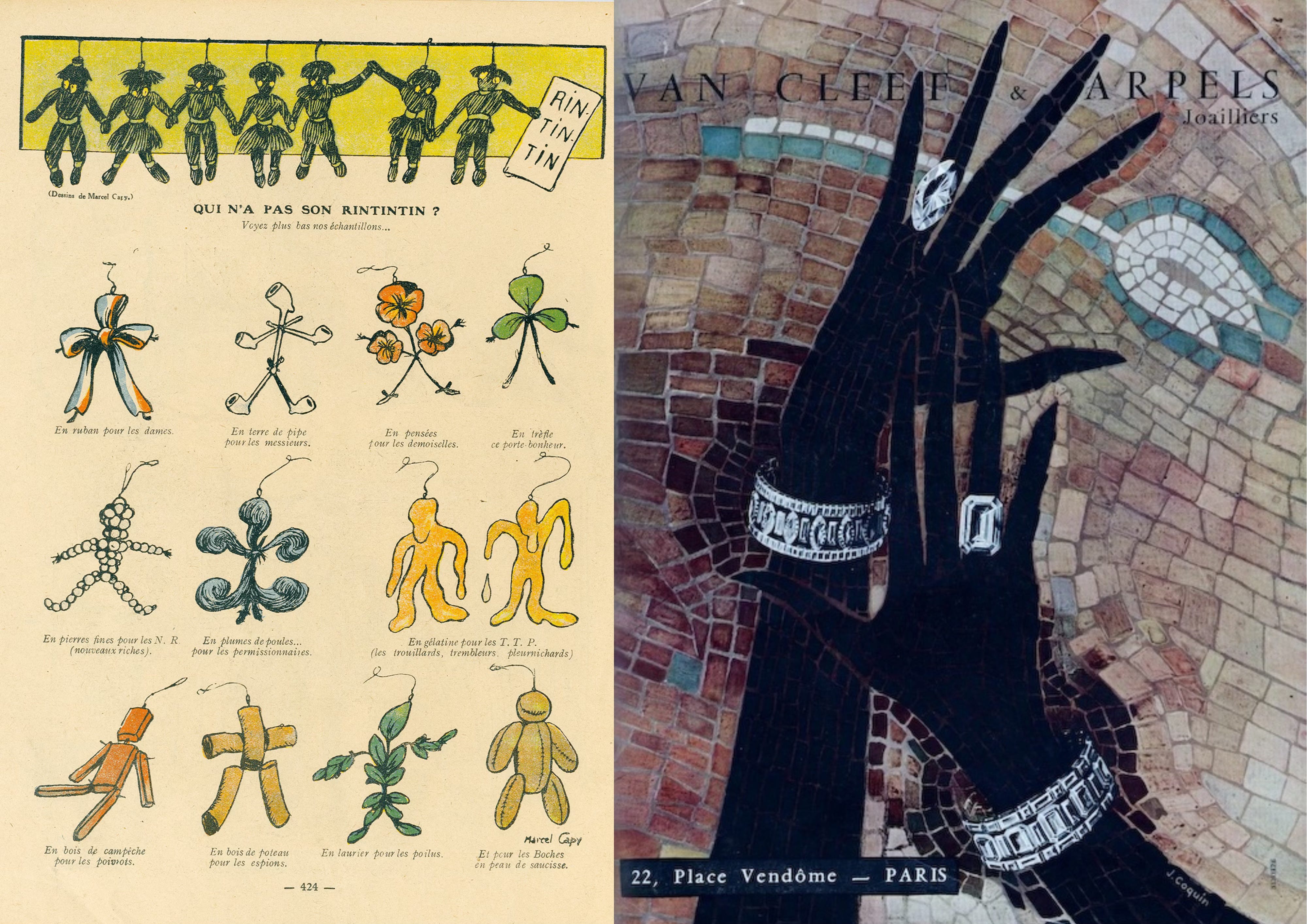
The four-leaf clover shows up in the house’s archives as early as 1906, at a time when good-luck charms were hugely popular in France. In 1916, its “Touch Wood” collection paired wood with gems in jewelry that soldiers and their loved ones embraced as symbols of good fortune. By 1968, when the clover became the Alhambra motif, its roots as a folk charm had become part of the design. Later, when the house revived its wooden jewelry, Jacques Arpels, who was largely responsible for the reissue, was known for saying, “To be lucky, you have to believe in luck,” a line that even appeared on one of the new bracelets.
Now there's the pink enamel Alhambra, the house's first new colorway in nearly sixty years and the release that sent me down this rabbit hole. The material changes, but the impulse doesn't.
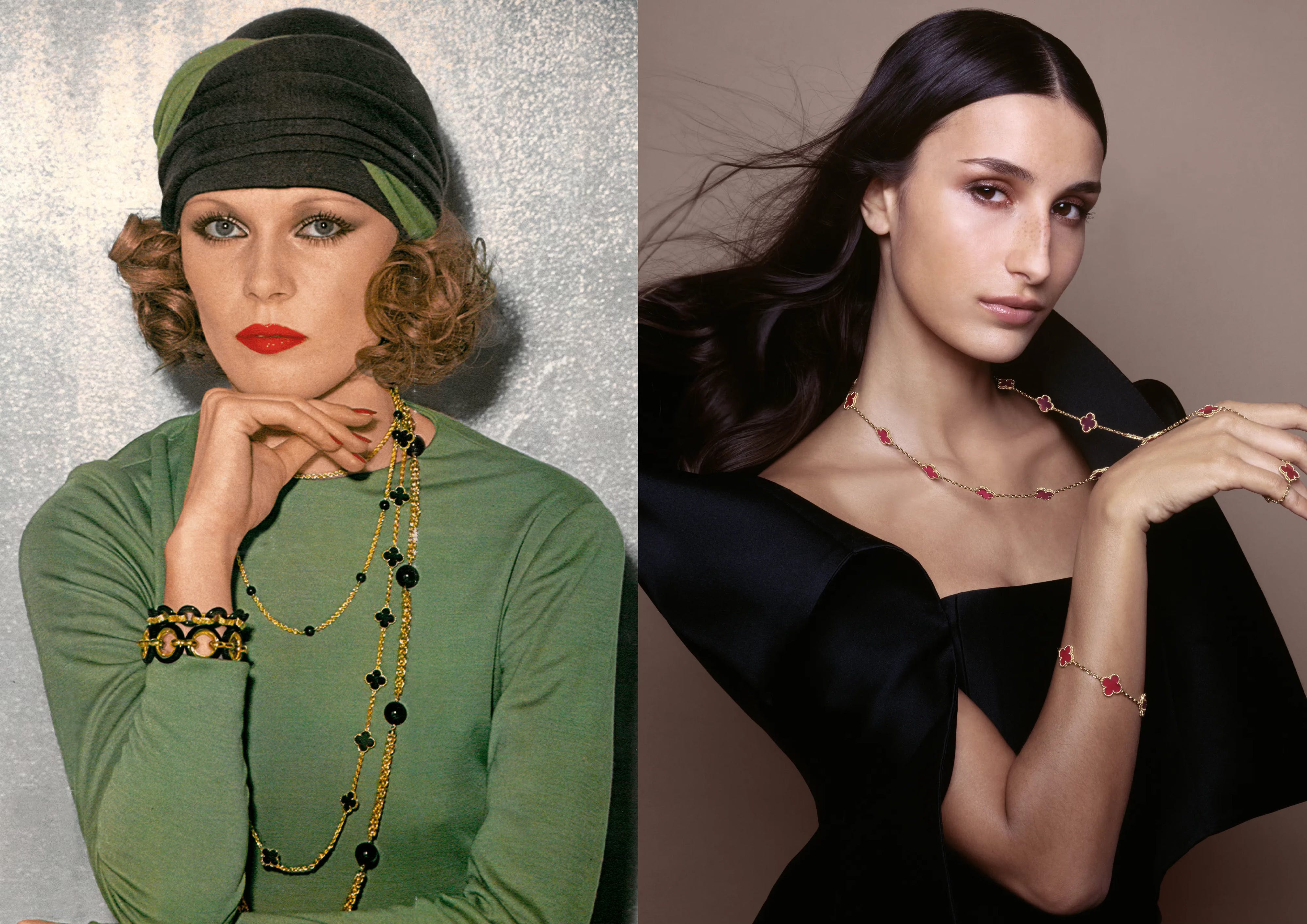
My theory, which I can't fully prove, is that this history is why Van Cleef increasingly feels like the house of this exact moment, when spiritual language is becoming more visible online. In the 2010s the Cartier Love bracelet felt like the piece everyone aspired to, and the Alhambra seems to hold that spot in the cultural imagination now. Most heritage houses have to pick a lane, usually pure institutional prestige or something more overtly enchanted. Van Cleef doesn't seem to need to choose. Luck and belief have been part of its story from the start, so it reads as serious enough for the person who wants old-world credibility and enchanted enough for the person who wants their jewelry to mean something, without ever trying too hard to be either.
Jewelry as Ritual
We put it on, inherit it, give it away and wear it through milestones until it’s inseparable from the memories attached to it. A grandmother’s necklace isn’t valuable only for its stone. It’s valuable because it participated in her life, and now participates in yours. The wedding band isn’t just a symbol of the wedding. Putting it on is part of the wedding.
That’s the bridge to spiritual culture, even though the two arrive at ritual from opposite directions. Where spirituality says alignment, luxury says identity. These aren’t synonyms, and treating them as interchangeable would flatten both. But they evolved independently to describe what an object holds for the person who chose it. Each side picks its words to protect its own brand and aesthetic, but past the campaigns the resemblance in what they stand for is hard to miss. And you don’t have to believe in astrology or crystal energy to recognize the behavior underneath all of it.
None of this means every piece is doing ritual work. Sometimes you just like the bracelet, and sometimes the diamond is simply beautiful. Significance is one thing jewelry can carry, not the only thing it is.
And where it does carry significance, the belief doesn’t have to be literal. There’s a real difference between believing an object has supernatural powers and believing it carries personal weight. A lucky charm doesn’t have to shift probability for someone to feel luckier wearing it, because a belief doesn’t need to be objectively true to be powerful. It only has to matter to whoever holds it.
Where the Worlds Are Colliding Now
I started paying attention to how literally this overlap plays out after hearing Gabrielle Saunders, founder of the jewelry line Ruveil, on JCK’s podcast The Jewelry District. Saunders is a GIA-trained gemologist, formerly a designer for Alexis Bittar and Harry Winston, who became a certified sound meditation facilitator. Describing her sound bowls, she pointed to one behind her, made of essentially pure quartz but “infused with different precious gemstones and metals,” which she said ties back to jewelry and gemology.
Then there’s The Diamond Frequency, which I found on TikTok because of course I did. It’s run by Evelina Bujor, an accredited diamond grader who now calls herself a “luxury metaphysical consultant.” By her own description, the project was created to bring transparency and trust to the diamond space while also aligning people with the metaphysical, and she places her work at “the intersection of science and frequency.” She built a coaching practice out of the grading language she already had, framing a diamond as defined not by its origin but by its refinement and applying that to the client.
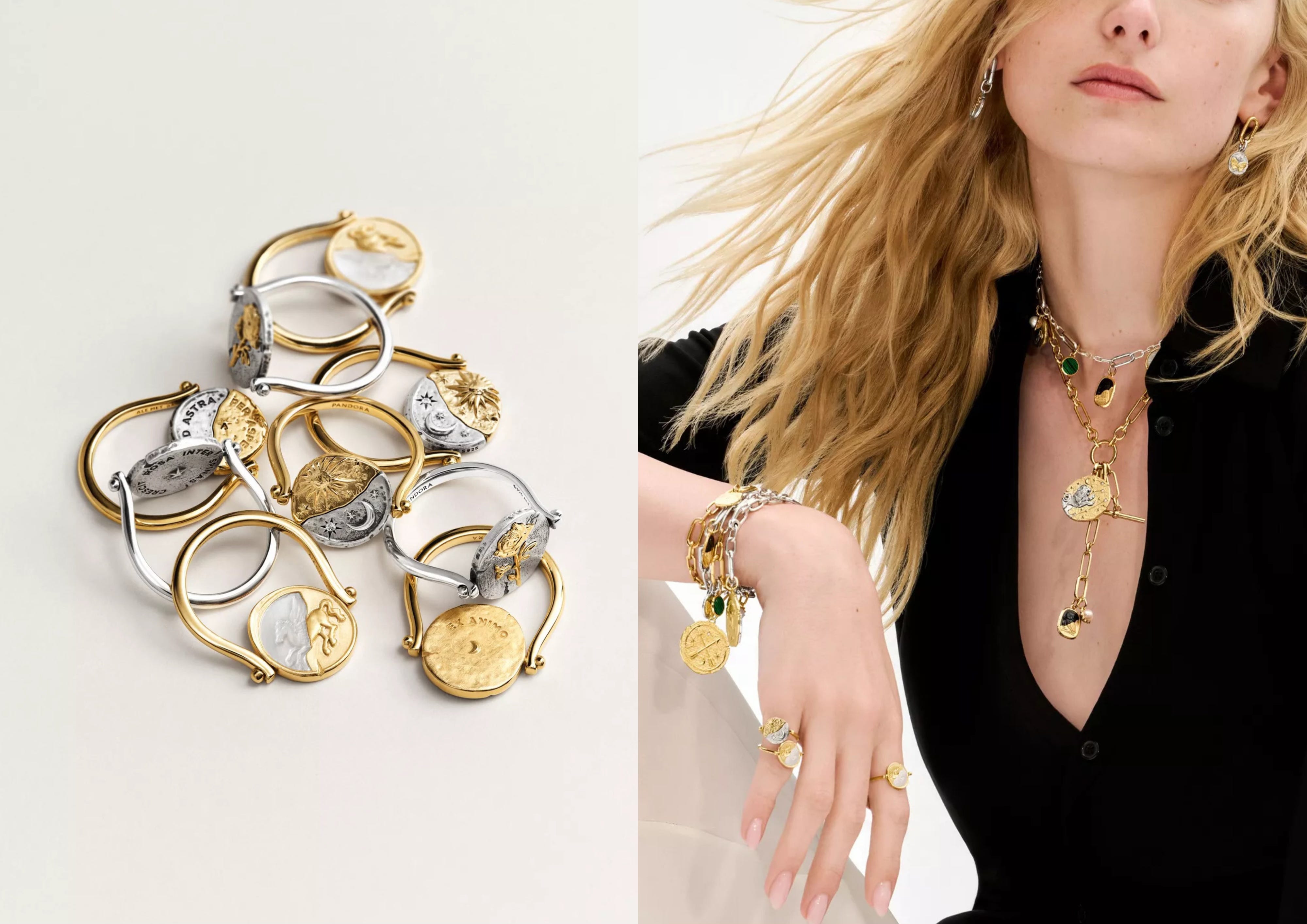
The mainstream market has noticed too. Pandora’s Talisman collection recently added a zodiac-inspired chapter built around astrology and symbolic charms, featuring Alex Consani. It launched with an event in Los Angeles on the eve of the Sturgeon Moon, tarot readings included.
Saunders and Bujor aren’t borrowing from one world to dress up the other. They’ve built both into their work, and Pandora is selling into the overlap. These are examples, not proof, but they suggest the two worlds have more in common than we tend to assume. Some people are blending them on their own terms, and the market is catching up.
A Different Kind of Luxury
Luxury gets reduced to price and status, but at its best it can be patience, longevity or the private way something feels.
Worth saying plainly, spiritual culture isn’t above commodification either. Crystals, tarot and wellness retreats all get packaged and sold, often at a premium, which makes them more alike than either side likes to admit. It doesn’t make them equivalent. A ten-dollar crystal and a five-figure ring can both serve as a personal talisman, but they differ enormously in craftsmanship, rarity, provenance, labor, durability and value. What they share has nothing to do with what either one sells for. It’s the emotional role they play in someone’s life.
I’m tired of watching people buy things mainly for what they’ll signal. Status isn’t shameful, and luxury has always communicated taste and belonging. But it’s at its richest when an object means more to the person wearing it than the message it sends to everyone else.
This is where spiritual culture does the jewelry industry a favor. It has already gotten a generation fascinated by zodiac signs, birthstones and the evil eye. That might actually be where a love of jewelry begins. The appetite for connection is already there.
What the industry needs is to romanticize jewelry a little differently, meeting people where they are through storytelling, community and personalization. In a world of overconsumption, where so much of what we buy feels disposable, that’s a chance to reconsider what it means to own something and why it matters. The goal ultimately isn’t to make jewelry more spiritual or Gen Z. It’s to use the culture we’re already in to the industry’s advantage, and to stop being afraid to break from the way jewelry has always been sold. That’s how jewelry culture gets passed on, by making people feel like it’s theirs.
We Wear What We Believe
We all assign significance to the things we care about, through religion, fashion, family and art. The specific belief system was never the point. Humans have always looked for ways to make the invisible tangible. Jewelry is one of the oldest ways we’ve done that.
Maybe that’s what I missed all those years. I kept the two rooms separate because the industry I worked in, and the generations of convention behind it, treated them as separate, and I mistook a difference in vocabulary for a difference in belief. I wasn’t divided between luxury and spirituality. I was separating two ways of talking about the same fascination with objects, beauty, symbolism, memory and a little transcendence.
I’m not in the showroom anymore, but I’m still a pretty good example of everything I just described. Splitting myself in two never felt genuine, and that’s part of what pushed me out of sales. But my woo-woo side may have been the quiet influence that kept me drawn to fine jewelry long after I walked away. Had I understood I didn’t have to keep those two sides of me so far apart, I could have romanticized the room the way I actually felt it, instead of performing the version I thought the job and the industry required. Maybe it took leaving to see it. I believe things happen for a reason, and this might be mine. I’m writing for Cult Carat now, hoping this generation finds jewelry as magical as I do, with no deal to close.
The universe truly does work in mysterious ways. But again, that’s just the woo-woo in me talking.
For the jewelry obsessed…
Yes you are speaking my language!!
Integration is where it’s at. I absolutely love this!