


Let’s talk about how a hot glue gun and a bag of rhinestones are casually seeding the next generation of fine jewelry enthusiasts.
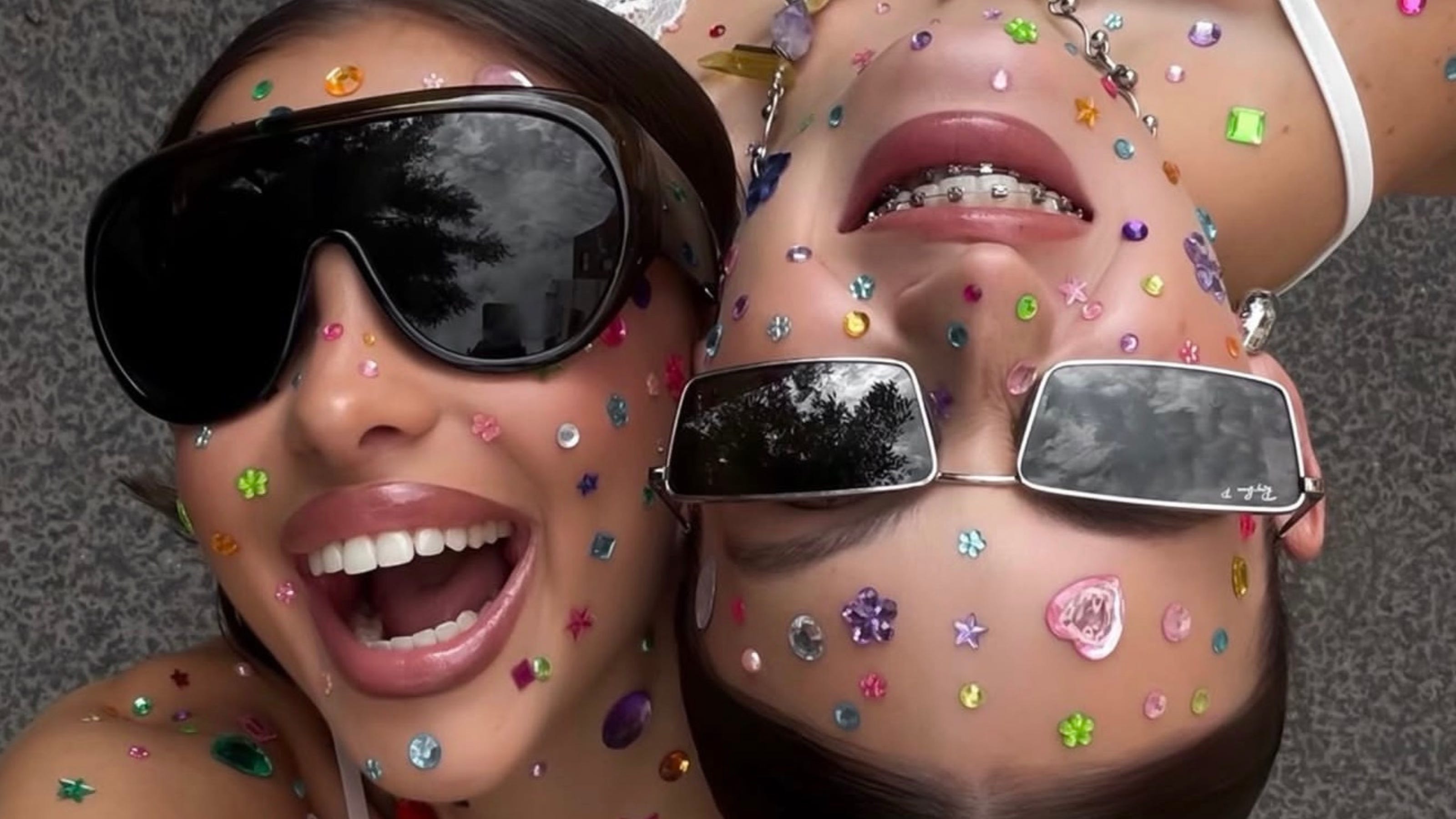
What made me actually sit up and pay attention wasn’t a runway or a headline. It was cakes and plastic cups. Specifically, the bedazzling all over Kylie Jenner’s most recent birthday party, where even the desserts were dripping in oversized, faceted, gem-shaped crystals. The bedazzle trend has technically been building all year, but I’ll admit I tuned most of it out as background noise. Glitter on a Stanley cup, fine, cute, whatever. It wasn’t until the bedazzles themselves started getting bigger and more shapely, convincingly mimicking real gem cuts instead of just flat craft-store rhinestones, that it clicked for me. This isn’t a decorative trend anymore. This is a preview of where the luxury industry is headed.
For the last few years, we were all supposed to want to disappear. Beige everything. Dainty gold necklaces. Logos hidden, price tags invisible, taste proven by how little you showed. That was Quiet Luxury. And I get it, it was a nice palate cleanser. But it’s over. RIP to the “clean girl aesthetic.” And I don’t think enough people are talking about what’s replacing it, or why.
We are officially entering the Second Bling Era.
The Gateway Drug
Here’s the thing about the bedazzle boom that most trend articles miss. It’s not a joke, it’s a gateway drug.
Fashion forecasters have already started naming 2026 the year maximalist jewelry took over. That’s not a niche TikTok moment, that’s a macro shift. And once you start noticing sparkle everywhere, a plain 2mm gold band stops satisfying you. You start craving more.
What convinced me this is going somewhere bigger is that the bedazzles themselves are changing. Manufacturers are engineering deep, jewel-toned stones with real internal clarity (emerald greens and sapphire blues that lowkey resemble the real, life-sized thing).
And then there’s tooth gems. The ultimate tell. What used to be a cheap rhinestone stuck on with nail glue is now 18K gold charms and certified Swarovski crystals applied by a trained professional. Real gold and diamond simulants on your teeth... sound familiar? That’s grillz. We’ve been here before.
Proof It’s Already Happening
If you want receipts, look up. Look at the runway, look at the auction block.
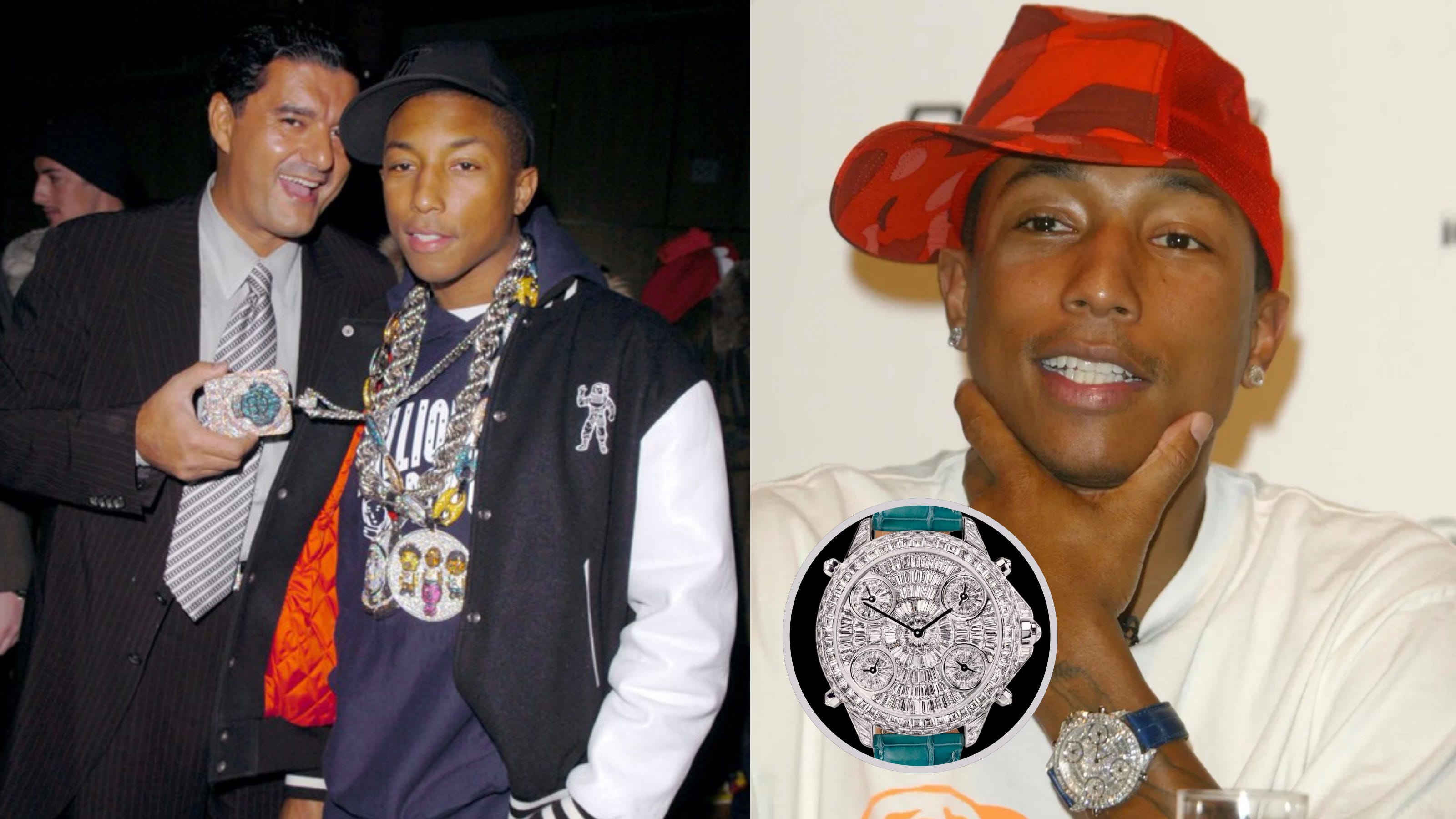
Earlier this year, Pharrell’s digital auction house JOOPITER teamed up with Jacob Arabo to auction off 30 archival pieces from the original early-2000s bling era — colorful, multi-carat gemstone necklaces, the legendary Jacob & Co. Five Time Zone watch. High-net-worth millennials and Gen Z collectors weren’t bidding millions because it was ironic. They were bidding because that period of jewelry has been quietly reclassified. It’s not dated hip-hop flash anymore. It’s historic high jewelry.
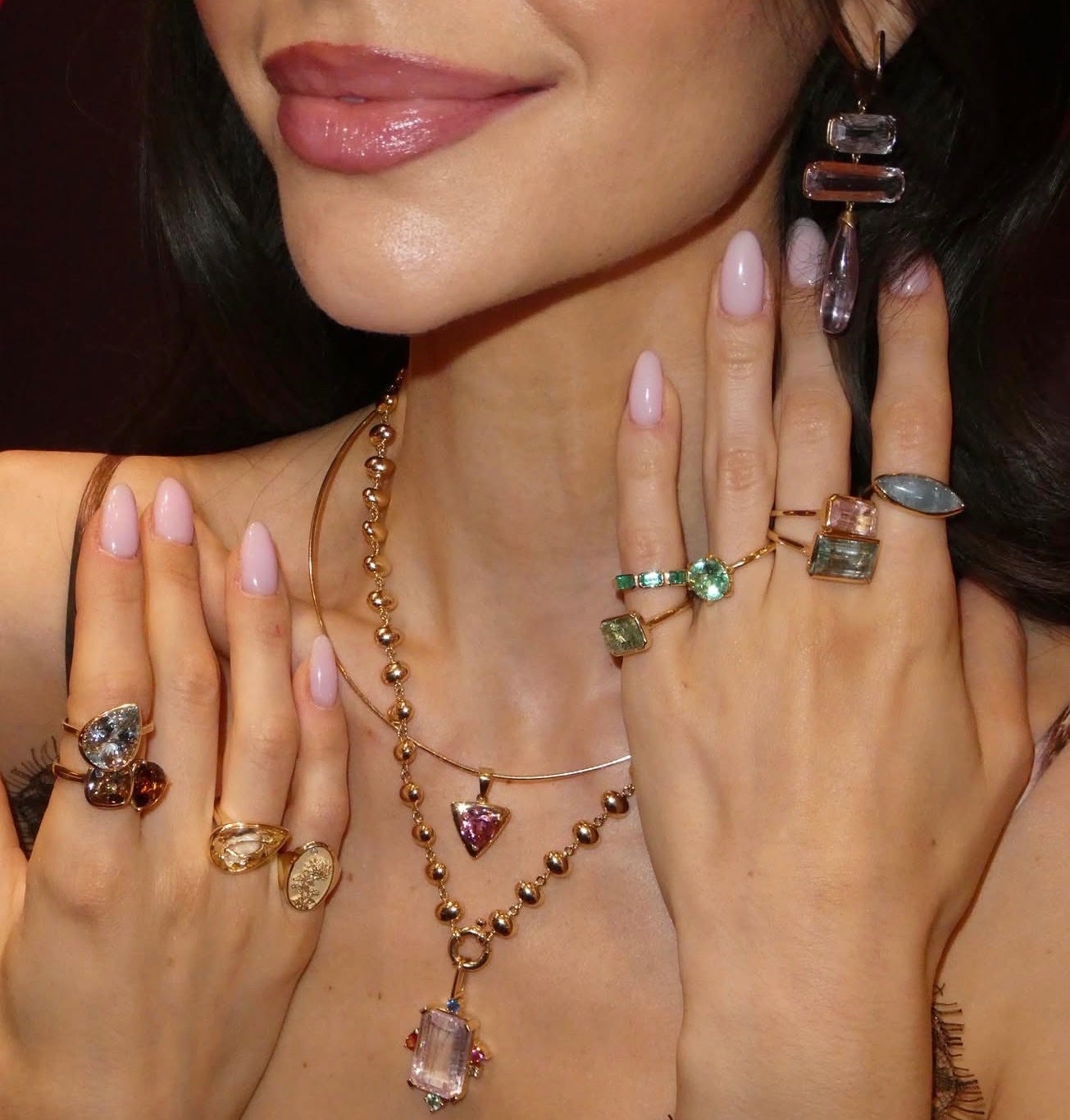
Meanwhile, forecasters are calling for exactly the aesthetic that era pioneered. Vibrant sapphires, rubies, and champagne and cognac diamonds are elbowing white diamonds out of the spotlight. And the torque necklace, that thick, rigid, statement-pendant collar, has been showing up on runways at Gucci, Schiaparelli, and Acne for two seasons running now, each one going bigger and more sculptural than the last. Menswear is right there with it. Amiri has built entire drops around crystal-embellished denim and sneakers, and I've been seeing men's brooches show up on red carpets over the past year too. The “who will be the men?” collective cry for help will, unfortunately, continue.
There’s also a metal swap worth noting: icy platinum was the flex back then. This time, it’s warm yellow gold and color doing the heavy lifting.
The Four Things Actually Fueling This
A trend needs more than vibes to take hold, so here it is:
Lab-grown diamonds broke the gate. The original bling era required a record deal to get properly iced out. Natural diamonds at that scale were reserved for the ultra-wealthy. Now you can get a massive, VVS-clarity chain for a fraction of what a natural stone would cost. Lab-grown diamonds essentially commoditized size and clarity overnight, and in an interesting twist, that’s exactly what’s pushing natural-diamond loyalists toward something different. Not size, but story. There’s a growing uptick in interest around natural fancy-color diamonds (traceable mine-to-market sourcing), the kind of one-of-one detail that comes from the stone itself, not a lab process. Either way you slice it, both camps are pouring more energy and money into fine jewelry, and the culture around it just keeps getting richer.
We’re dressing for dopamine. Fashion has always followed anxiety with escapism. Quiet Luxury was pandemic exhaustion, a collective instinct to blend in. Bling is the opposite. It’s loud, joyful and impossible to ignore.
The line between tacky and high art is dissolving. Every maximalist swing gets called gaudy by the people in slicked-back buns still clutching their knit sweaters. But the boundary between “low” craft and “high” luxury is fading. This era isn’t trying to look tasteful in the traditional sense. It’s playing with irony on purpose, and treating shine as a small rebellion against corporate-baddie minimalism.
The camera demands it. The first bling era was built for paparazzi flashbulbs and low-res MTV broadcasts. Jewelry had to be huge just to register on screen. Bling 2.0 is built for the smartphone. TikTok and Instagram Reels reward high-contrast, light-catching movement, and minimalist jewelry simply vanishes on a phone screen. Heavy pavé, vibrant gems, crystal-covered fits catch the lens and stop the scroll. It’s no accident that the Canon G7X, a 2010s point-and-shoot with that same harsh, blown-out flash, has become one of the most in-demand secondhand cameras again. Same high-contrast, everything-sparkles style the early 2000s ran on, just channeled through a new device.
The Honest Objection
Here’s the pushback I take seriously, and it’s not “this is tacky,” because critics have said that about every maximalist swing since Cleopatra and they’ll keep saying it forever. The core objection is economic. A lot of people simply can’t afford to buy fine jewelry right now. Cost of living is up, discretionary income is down, and “just go buy a pavé diamond chain” is not a realistic response to that reality for most of the audience driving the bedazzle trend online.
It’s exactly why I don’t think this transition happens overnight, or only in the form of direct purchases. It’s more likely to show up sideways first, through aspiration and apprenticeship.
Here’s what I’m noticing online. People are buying loose stones off TikTok Shop, of all places (I can’t vouch for how reliable that actually is, but the behavior itself says a lot), and having them custom set instead of waiting for a finished piece to become affordable. It’s less about buying jewelry off the shelf and more about commissioning it, and having an origin story behind it.
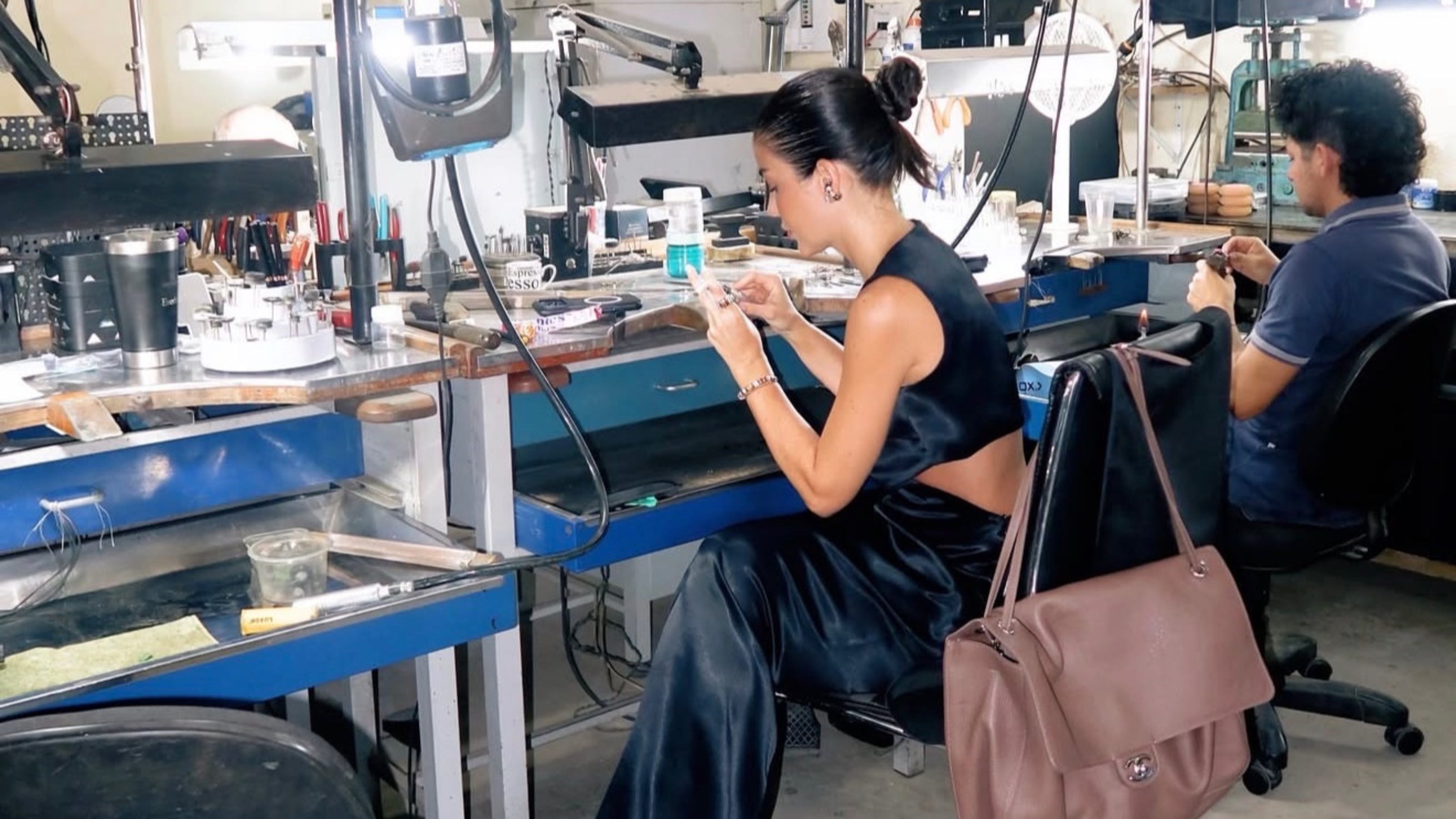
I’m also seeing a lot more small, independent jewelers getting certified through applied jewelry and gemology programs, learning stone-setting and diamond grading the proper way, and then designing and creating pieces for their own niche audiences instead of scaling into a big retail brand. Often documenting the whole process online for a following that’s learning right alongside them. And with that observation specifically, something else stands out. Women are reclaiming a trade that’s historically been male-dominated and gatekept. Doing it on their own terms, with their own hands.
The economy is, of course, part of the story. Trade skills are cheaper and faster to build than a traditional four-year degree for some people. But it’s not the whole story. There’s also a genuine hunger to make something with your hands again. Art therapists have started writing about how the repetitive, tactile motion of bedazzling an object is genuinely grounding, one of the few phone-free, fully-present activities left in a doomscrolling world. That’s not incidental to the bling trend. That’s why it’s sticking.
Fine jewelry doesn’t have to become the “it girl” purchase to become the “it girl” interest. It can become the thing people are learning to make, sourcing stones for, or apprenticing into, long before it becomes the thing everyone can casually buy. That’s still the Second Bling Era.
Where This Is Headed
Put it all together and the pattern is obvious. The bedazzle trend is the smoke, and a genuine, mainstream fine jewelry revival is the fire.
Fashion history gives us a clean parallel for the timing. The last true Bling Era ran for the better part of a decade, from the first Cash Money and G-Unit chains to Jacob the Jeweler practically becoming a genre unto himself. Quiet Luxury, by contrast, burned out almost as fast as it caught on, going from inescapable to "over" within a couple of years. Trend cycles don't run on decade-long timers anymore. They run on social media algorithms. So my bet is this one lands a lot faster than the last bling era did. Not a niche capsule collection here and there, but “jeweler-core” as a genuine aesthetic. Heavy, hand-set, custom fine jewelry will stop being a red-carpet exception and start being a normal Tuesday flex.
If I had to bet on specifics, bridal breaks first. Engagement rings are the most conservative, most quiet-luxury-coded category in fine jewelry, which makes them the biggest prize, and colored stones and statement settings are already creeping into bridal editorial. Menswear follows close behind, riding the crystal-embellished wave straight into pendant, chain, and brooch territory.
And yes, there will be a backlash. There always is. Once bridal brands and jewelry counters catch up, you’ll get the inevitable “luxury shouts, wealth whispers” thinkpieces. That will be our sign that it worked. Every maximalist era ends with its own diluted, overexposed version showing up at the mall, which is exactly what happened to Y2K bling by the mid-2000s.
We’re moving from gluing plastic gems onto matcha cups to buying fully custom fine jewelry. And the technology, the economics, and the psychology are all lined up to make it a thing.
Cult Carat is here for the ride, documenting this shift as it happens instead of after the fact. If you want to be ahead of the mainstream instead of catching up to it later, stick around. Get obsessed before it’s everywhere.